Considering contacting a financial adviser for Aged Care advice? You may not need an expensive financial plan. Contact me on (08) 8333 2488 to find out why!
A one hour consultation is only $200 + GST. For most people, it is all you will need.
We specialise in servicing regional and interstate people as we can consult over the phone or via email.
Aged Care / Nursing Home Fees
The move to an aged care facility is often not pl anned, but something that needs to happen quickly. If you find yourself suddenly responsible for making decisions on behalf of a loved one, we can help.
There are a range of fees and conditions to be met, it can be very confusing. We have the expertise as well as years of experience to save you time and frustration. We can quickly identify the important issues, cut to the chase, and provide advice when it needed.
We believe that in most cases people entering Aged Care facilities DO NOT need a full financial plan in order to understand the fee structure and the most financially beneficial option. A personal consultation with our adviser should be enough to equip you with enough information to navigate your way through the maze.
We can meet with our Adelaide-based clients for a face-to-face consultation, however we do have systems in place to provide services to regional and interstate clients.
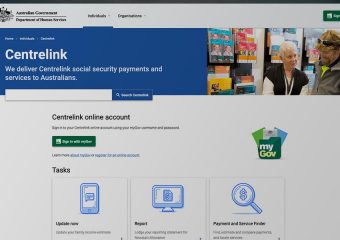
Centrelink Payments and Services
Dealing with Centrelink benefits is all about ensuring that you are maximising the benefits available to you. Changes to the Assets Test limits means that a large proportion of retirees can qualify for a full or part age pension.
As well as the Age Pension, there is a wide variety of payments available to those in need.
If you require assistance or would simply like a chat about Centrelink & Aged care, please contact Scott Keeley. With over 12 years experience with Centrelink, this area is Scott's specialty - He is aware of the unique and timely needs of people requiring help in these sometimes difficult situations and is only too happy to help.
Provide us with Feedback so we can improve our service
We are looking to improve our service and would appreciate your feedback. Please visit http://www.surveymonkey.com/s/CBNJLF5 and complete a short survey. All answers are confidential and will be extremely valuable to us.
|
-
Many people find their way to our website by searching using keywords such as ‘maximising age pension’ or ‘increasing centrelink payments’. In my face-to-face encounters or phone calls, getting the most out of government payments is regularly discussed. I thought l’d outline some of the strategies that are considered. While there are more, these are the most common ones.
History
Before discussing the few remaining strategies that can be used to increase government income support, let’s have a look at two strategies that were available previously, that I still get questions about today:
Annuities – These income stream products were used regularly up until 20th September 2004. Until this time, any amount used to purchase a ‘complying annuity' (that is, one that met a range of criteria around investment terms and residual capital value) was exempt from the Assets Test. They were a regular part of many people’s retirement planning, although now with money invested fully assessable under the Assets Test and often inaccessible as a lump sum they are no longer any significant benefit for pension purposes.
Family Trusts and Private Companies – From 1st January 2002 assets held in these entities came under the governments microscope. Prior to this, people who held their assets under trust or company structures often received greater pension entitlements as these assetsmay have beenexcluded from the Assets Test. The change in legislation in 2002 now sees people who hold assets in these entities often treated exactly the same as if they held the assets themselves. That is, there may be no significant advantage to having these structures in place for maximising government benefits.
These rule changes in my view were entirely fair. Essentially people with the same amount of assets now receive the same amount of government support, regardless of how they have their assets structured.
So What’s Left?
Perhaps the simple answer is – not much. The above strategies could be implemented with many hundreds of thousands of dollars, making them very popular and very effective at improving government entitlements.
The remaining strategies can be split into 2 categories:
Strategies that everyone can consider; and
Strategies that those meeting certain criteria can consider.
The strategies that everyone can consider have negligible impact on the amount of pension payments you can receive, and as such, may not be worth the effort:
Gifting – up to $10,000 can be given away per financial year, up to a maximum of $30,000 in a 5 year period. This $10,000 no longer counts as an asset. I have discussed the concept of gifting in a previous article (“I’m Only Allowed To Give Away $10,000!”).
Funeral Planning – either up to $10,000 can be placed into a Funeral Bond or a pre-paid funeral plan can be purchased. These assets are exempt from the Assets and Income Tests. These can make sense for more reasons than just maximising pension entitlements.
There are a couple of other strategies that could be considered by people in particular situations:
Pensioners with younger spouses – Money invested in superannuation for those under Age Pension age is exempt from Centrelink/DVA assessment. Therefore, if you are of pension age, and your spouse isn’t yet, there may be benefit in transferring assets to their superannuation. Bear in mind, this will only be beneficial until the younger spouse turns Age Pension age, and probably requires planning before either of you turn Age Pension age.
Income Stream Payments – People who have higher incomes that preclude them from pension entitlements may find that income from an Account-Based Pension is treated more favourably than deemed income on the same investments. Account – Based Pension payments include a capital component that is exempt from the Income Test.
As you can see, this can be a complex area requiring financial advice. If you would like to increase your pension entitlement, or find yourself ‘just over the Asset or Income Test limits’, talk to us today for expert advice on your options.
With over 12 years working at Centrelink, and 5 years as a Financial Planner, I can assist you with all of your enquiries. Please contact me on (08) 8333 2488.
Scott Keeley
Read more
-
I (Scott Keeley) spend much of my day speaking with the families of people who are preparing to enter Aged Care Facilities. This is a particularly traumatic time for most family, and this trauma is only compounded by the complex nature of the various fee structures. In my contact with clients, often the same questions come up. There is the opinion that the cost of Aged Care is far too expensive, and unaffordable for those who own their own home, but have little in the way of other assets.
I thought I'd provide here a list of the most common myths that I hear that relate to the cost of Aged Care.
My ongoing fees will only be 85% of my pension!
While the Basic Daily Care Fee is linked to 85% of the full Age Pension, additional fees can also be charged. These include Daily Income Tested Fees, Accommodation Charges (for high level care) and potential Extra Services Fees. As a result, the total ongoing fee may be a lot higher than 85% of the pension.
I will have to sell my home to pay for the Accommodation Bond!
Maybe, but not necessarily. While this may be the most commonly explored option, renting the home and organising to pay the Accommodation Bond via periodic payments may also achieve an affordable outcome.
Only the rich who can afford to pay a large Accommodation Bond can get into a low level care facility!
The Government does in many cases subsidise the costs associated with providing Aged Care for those residents who are unable to afford large Accommodation Bonds. Furthermore, Aged Care Facilities are required to set aside a certain percentage of beds for "concessional" or "assisted" residents, ensuring everyone has equal access to care.
The Accommodation Bond is dead money!
A large proportion of money paid as an Accommodation Bond is refunded to the resident when they leave the Aged Care Facility, or to their estate when they pass away.
I'd be better off giving everything away so I can avoid or lower the fees!
As with most things in life, money buys choice. Having assets at your disposal should ensure you can choose an Aged Care Facility that is close to family, can provide the required care, and that you are happy with. Giving away assets may not improve your position. It can have significant implications from a Centrelink and an Aged Care Fee perspective. Seek specialist advice before considering this!
If we set up a family trust, we can avoid or lower the fees!
While this may be sometimes true, again specialist advice is required before considering this. The utilisation of family trusts may have some impact in reducing Daily Income Tested Fees, however I'm yet to be convinced of the merit. The Daily Income Tested Fee is only reduced because the resident's income is reduced! Sure, you pay less fees, but only because you receive less income! Robbing Peter to pay Paul?
Summary
Too much emphasiscan beplaced on keeping the full rate of Age Pension, or paying the lowest possible ongoing fees for Aged Care. In my mind, this focus is misplaced. Overall cashflow is far more important (regardless of the source). Let us help you find the best outcome. Crunching the numbers, and being aware of all of your options, should ensure that the financial aspects of entering Aged Care are far less intimidating.
Scott Keeley - enquiries@wakefieldpartners.com.au
(08) 8333 2488
Read more
-
In September 2007, John Howard’s parting gift was a significant increase to the Asset Test limits for Age Pension. To provide some context, pre-September 2007, if a couple who owned their home had more than $531,000 in other assets (real estate other than the home, financial investments, motor vehicles etc) they would have no entitlement to Age Pension.
As at 20th March 2010, that same couple can have $957,500 in assets other than their home and potentially still be eligible for an Age Pension.
Let me say that again! A couple who own their home can have pretty much $1 million in other assets, and potentially qualify for an Age Pension!
These changes were widely publicised at the time, in fact the Government estimated that an additional 100,000 Australians would become eligible for Age Pension as a result.
While many older Australians applied for, and became, Age Pensioners, I am still surprised to see a few people a month come through our doors that are now eligible that aren’t aware.
So why aremany older Australians who are entitled to Age Pension not receiving their entitlement?
The answer perhaps lies with the date of the change - September 2007. In September 2007, the Australian Sharemarket was setting record highs (the ASX All Ordinaries passed through 6,500 points), and the words “sub” and “prime” were rarely mentioned in the same sentence, let alone joined to make one word! People’s financial assets were perhaps quite substantial and well in excess of even the new significantly improved Asset Test limits.
Almost 3 years later, the Global Financial Crisis now has arecognisable acronym, the ASX All Ordinariessit at 4,400 and some people’s financial assets havereduced in value.
Why not take some time to revisit your situation and explore your entitlements. With over 12 years working at Centrelink, Scott Keeley can review your assets and assist you to determine whether or not you may be eligible for any forms of assistance from Centrelink. And don't be afraid of the paperwork, he can help you with that too.....
Read more
|